• Adult Congenital Heart Disease

    Presented on October 16, 2019, by Ali N. Zaidi, MD

    At the end of this video, viewers will be able to:
    Describe the growth of Adult Congenital Heart Disease
    Provide a brief review of the surgical procedures that have shaped ACHD
    Discuss the growing role of Mechanical Circulatory Support and Transplantation in ACHD

  • Systolic Anterior Motion After Mitral Valve Repair

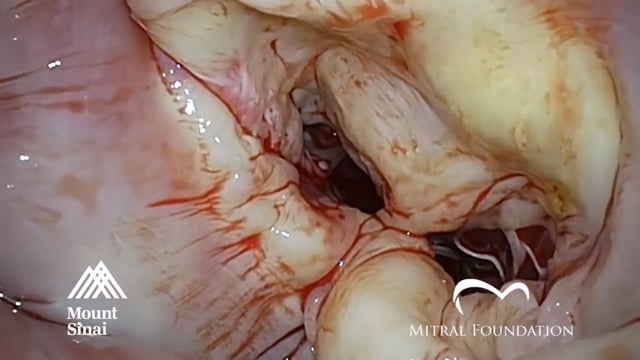
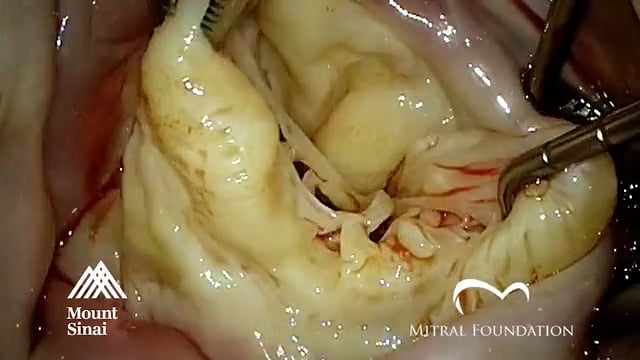
    Systolic anterior motion occurs after mitral valve repair due to an excess of leaflet tissue versus the anterior lateral height of the orifice of the mitral valve. The posterior leaflet pushes the anterior leaflet into the outflow tract. There are two principal causes for this. One is excess height of the posterior leaflet after reconstruction. The second one is a ring size that is too small for the available leaflet tissue.

  • Residual Mitral Regurgitation After Mitral Valve Repair: Leaflet Perforation

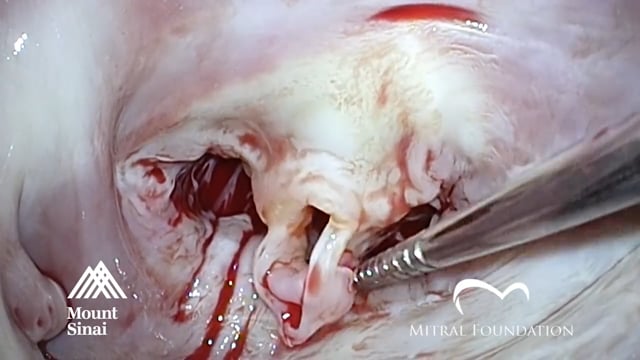
    High velocity jets after mitral valve repair strongly suggest leaflet perforation. They're usually simple lesions to re-repair. And if patients are stable and have good ventricular function, it's usually worth a second look on bypass to identify them. They can be dynamic and they can also happen from a pressurized ventricle and when you see them, you shouldn't just trust the sailing test, you should go back on and reexamine the valve.

  • Barlow's Disease: Mitral Valve Repair with Limited De-calcification

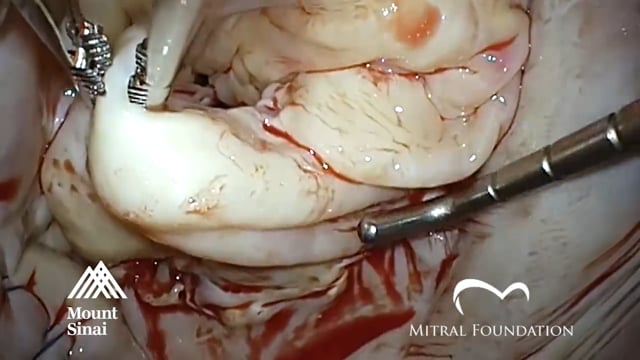
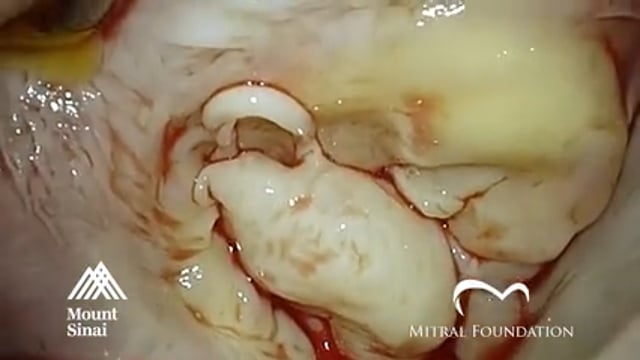
    In this video we show an example of a reconstruction of Barlow's valve disease in a patient that has calcification of the annulus. The key steps we'll show are a detachment of the leaflet with a targeted de-calcification of the annulus and then reconstruction of the posterior leaflet and finally ring annuloplasty.

  • Anterior Leaflet Mitral Valve Repair: Chordal Transposition and Neochordoplasty

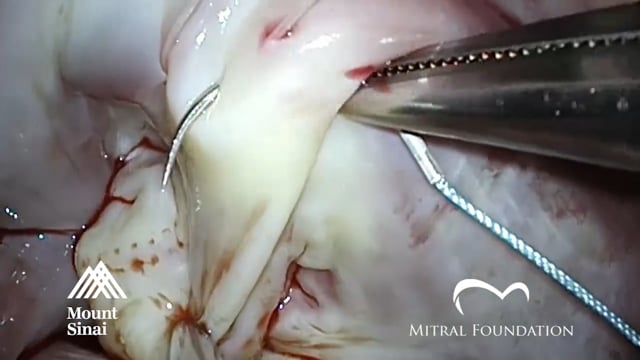
    There are a variety of repair strategies that are useful for anterior leaflet prolapse. In this video, we're going to show a technique of single suture PTFE, placed in the tip of the papillary muscle and passed through the free edge, with final height adjustment during saline testing; a functional height adjustment, as opposed to geometric adjustment.

  • Mitral Valve Repair for Posterior Middle Segment Prolapse: Triangular Resection

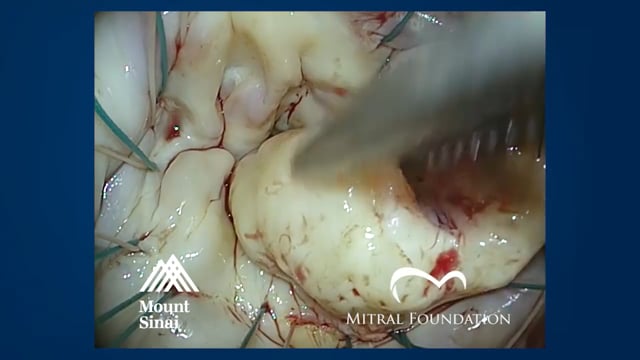
    Triangular resection is a simple technique. It's designed to correct prolapse at the margin of the leaflet. As demonstrated in this case, adjusting the width and depth of the triangular resection will allow you to tailor the body of the leaflet to the correct height and deal with myxomatous degeneration that may be present.

  • Mitral Valve Repair with Sliding Leaflet Plasty and Annular Plication

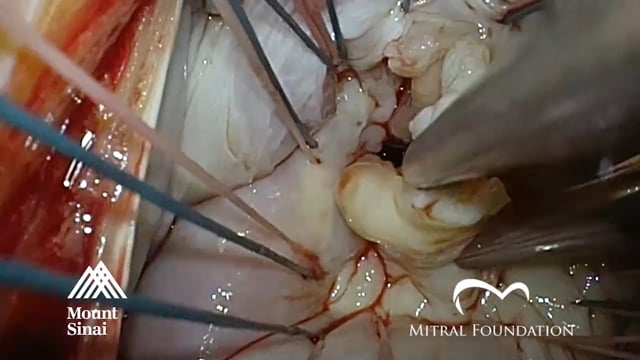
    This Mitral Foundation Teaching Library case is going to demonstrate sliding leaflet plasty in combination with annular plication to treat a patient with a Barlow's malformation.

    Our main strategy for treating patients with excess posterior leaflet tissue is sliding leaflet plasty. We follow Carpentier's rules, usually performing a limited quadrangular resection. We do resect less tissue today than we did historically, and then we reattach the leaflet along the annulus. Annular plication is sometimes used to narrow the orifice and take tension off the leaflet.