Mitral Valve Repair Reference Center at The Mount Sinai Hospital Mount Sinai Heart

Read video transcript []

This patient is a 33-year-old male patient with a long history of a cardiac murmur who was recently noted by his cardiologist to have severe mitral regurgitation and so was referred for surgical treatment.


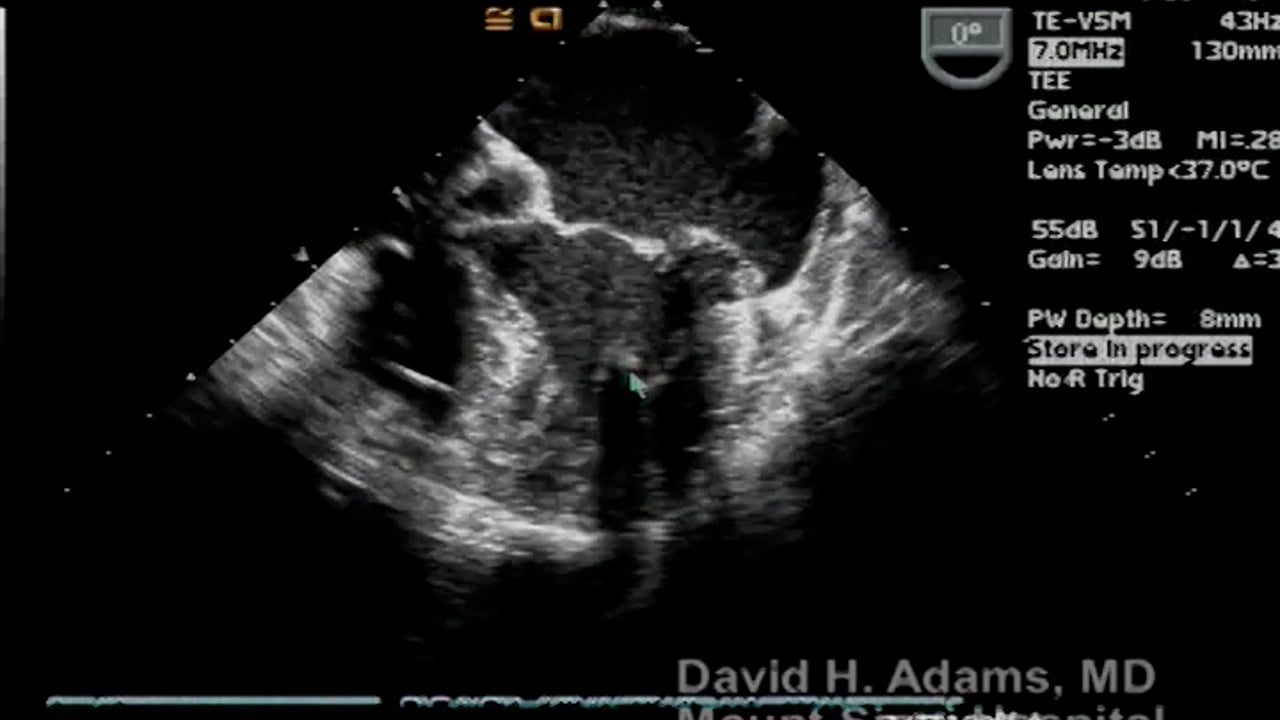
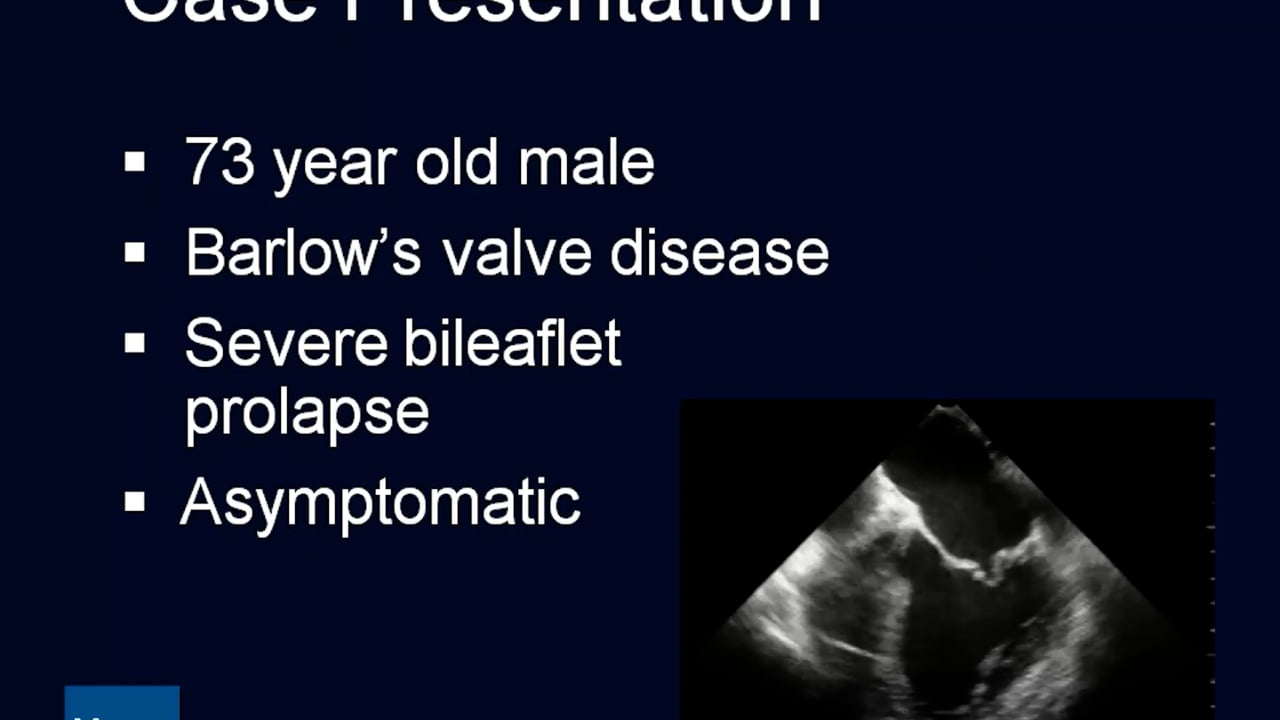
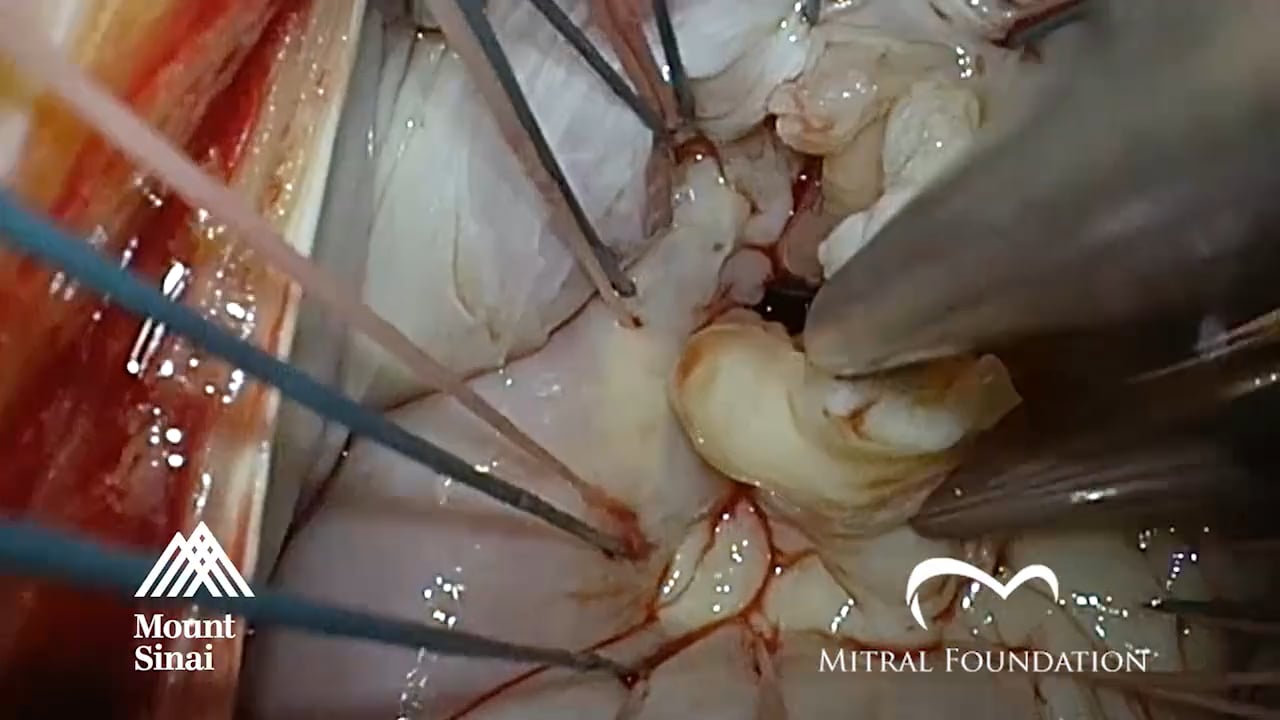
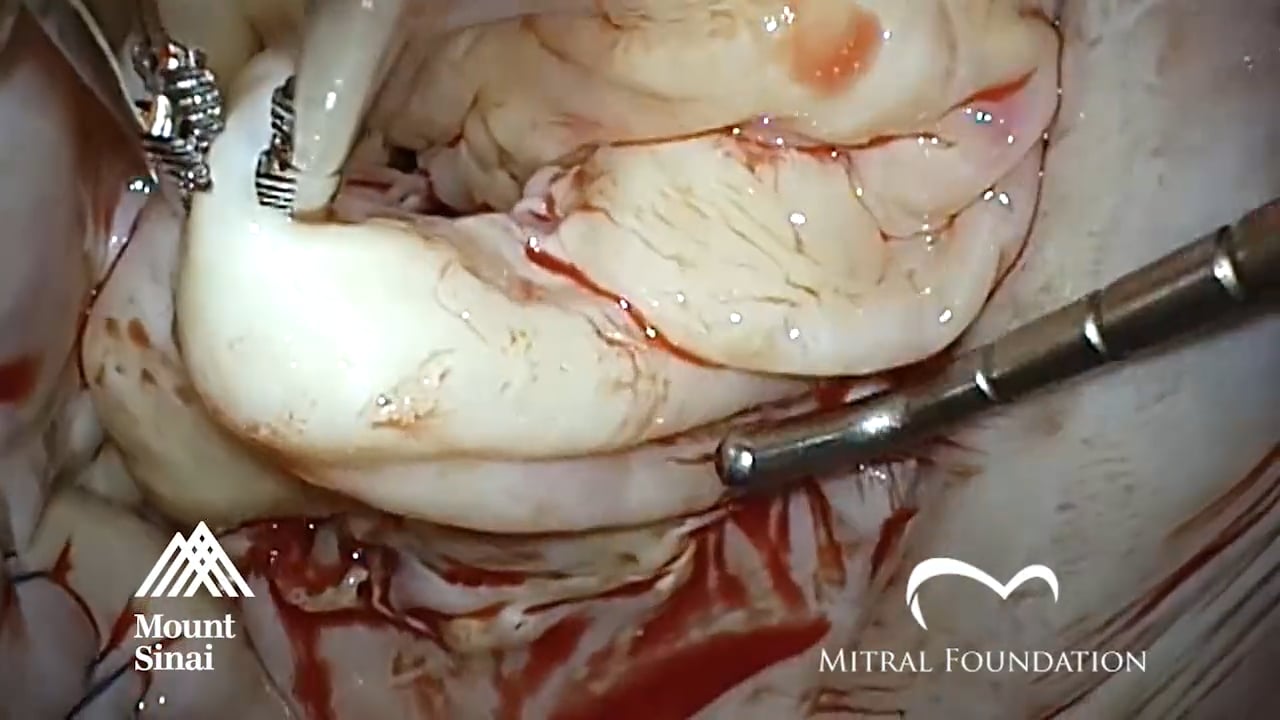
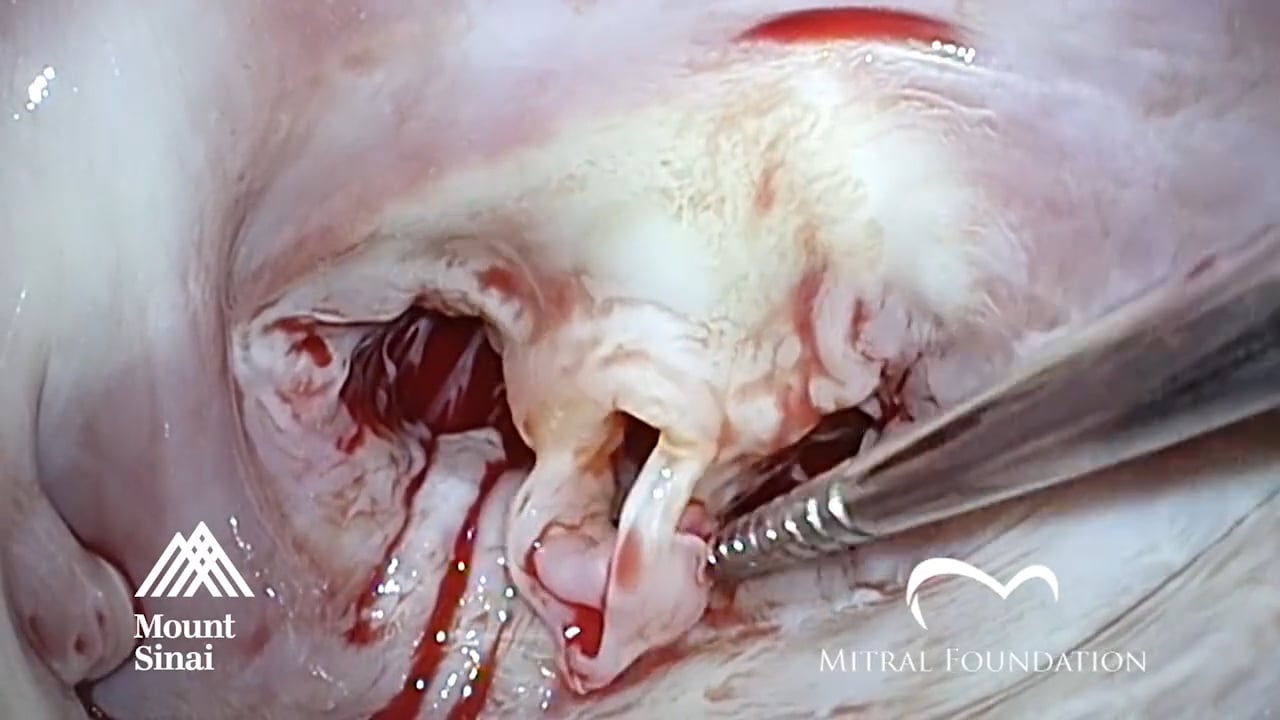
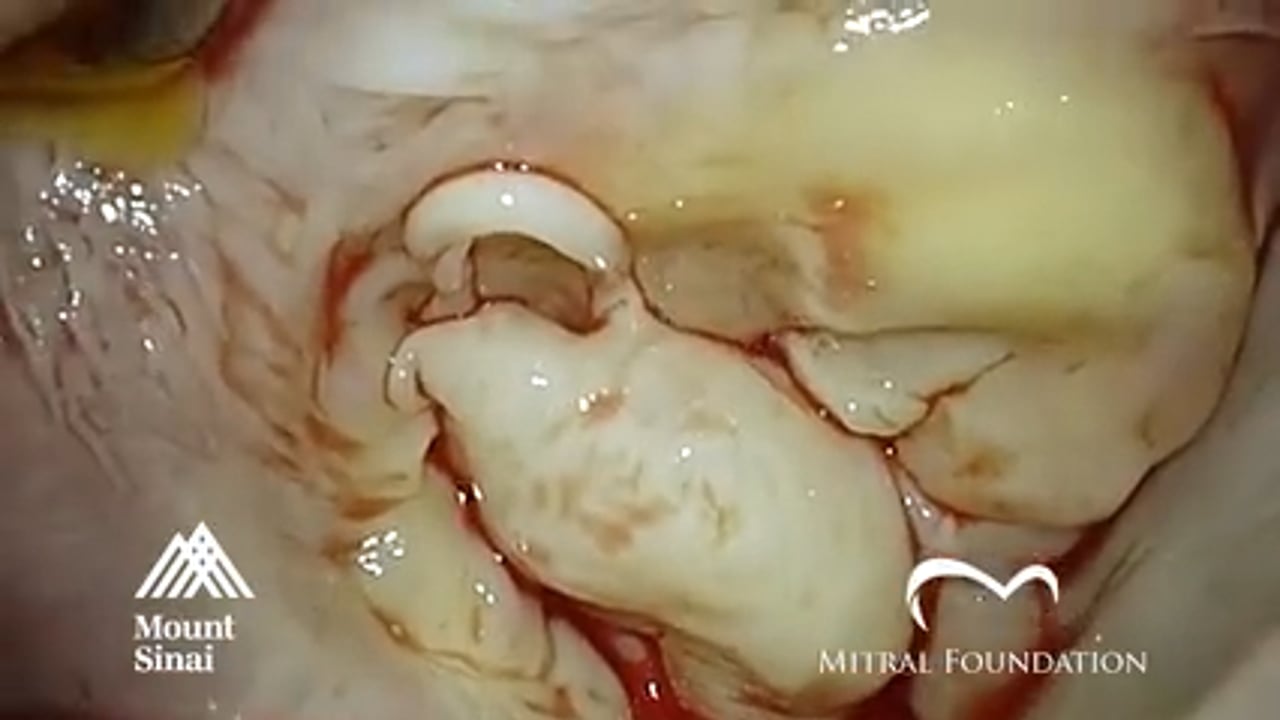
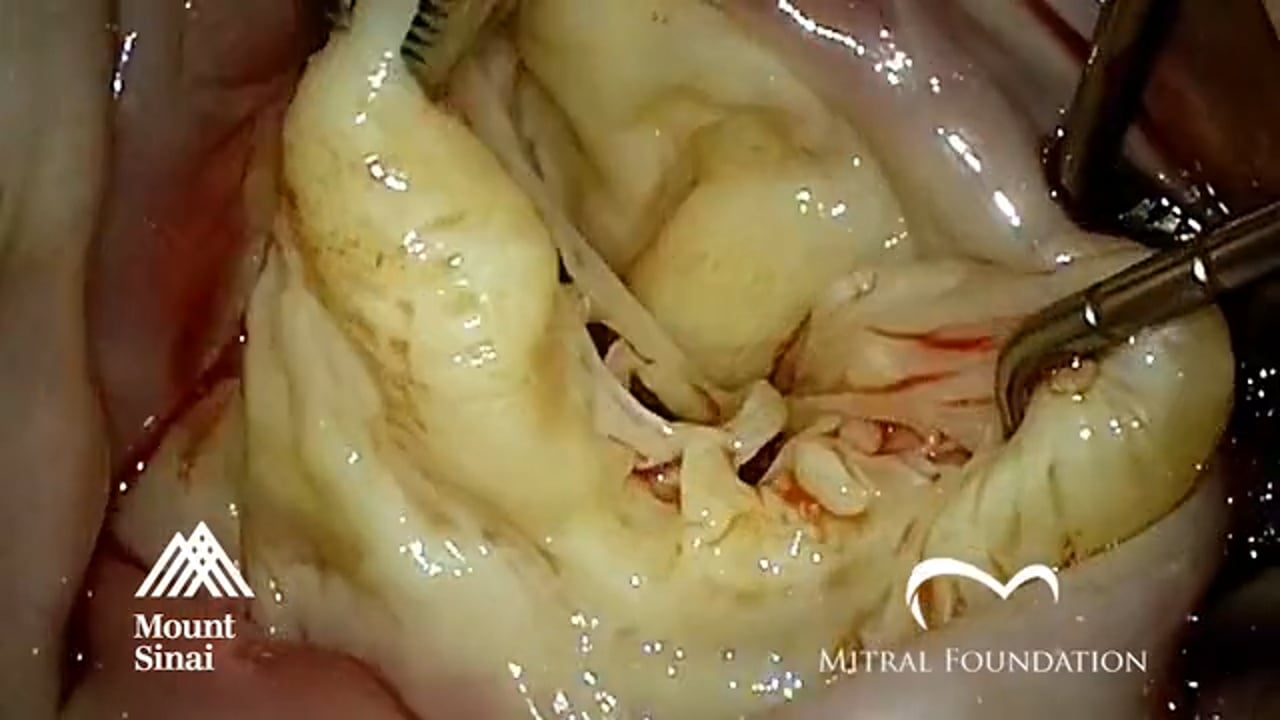
Echocardiography shows bi-leaflet prolapse with features typical of Barlow’s disease. The mitral valve has been exposed. Notable features are a large anterior leaflet, a tall posterior leaflet in the P3 segment shown here, restriction of the mid-segment of the posterior leaflet with a calcified mass of papillary muscles and chordae seen below, a tall P2 segment of the posterior leaflet, and a normal sized P1 segment. Also noted are two ruptured chordae to the posterior leaflet P2 segment.


We are first closing the cleft between P1 and P2, which will make subsequent alignment of the leaflet more straightforward. Following this, we can now resect the mid-segment of the P2. We are now examining the valve again and seen is the calcified mass. It is a 1 cm mass which involves chordae to the P2 segment causing a 3A restriction in this region. Here we are dividing secondary chordae to this area to release the leaflet. We are now deciding on our area of resection and will resect the entire restricted portion of the posterior leaflet.


Initially, we make a small resection and then as the repair goes along we can adjust and resect more tissue as required. We are now completing the excision of the calcified leaflet with the attached mass. We are then performing a detachment of the P3 segment from the posterior commissure to the entire mid-annulus to the area of prior resection. Secondary chordae are divided to further mobilize the detached leaflet segment and prevent restriction after repair. The annulus has been plicated to reduce tension on the reconstituted leaflet. Next, we are excising an additional segment of P2, as there is abundant P3 to slide to reconstitute the posterior leaflet. Marks are placed on the posterior leaflet and also on the annulus to allow accurate re-approximation. We then re-attached the leaflet with a sliding technique. This is done with a double-layer of 4-0 Prolene sutures and is performed in such a way that we will have a residual height of around 12 mm of posterior leaflet.


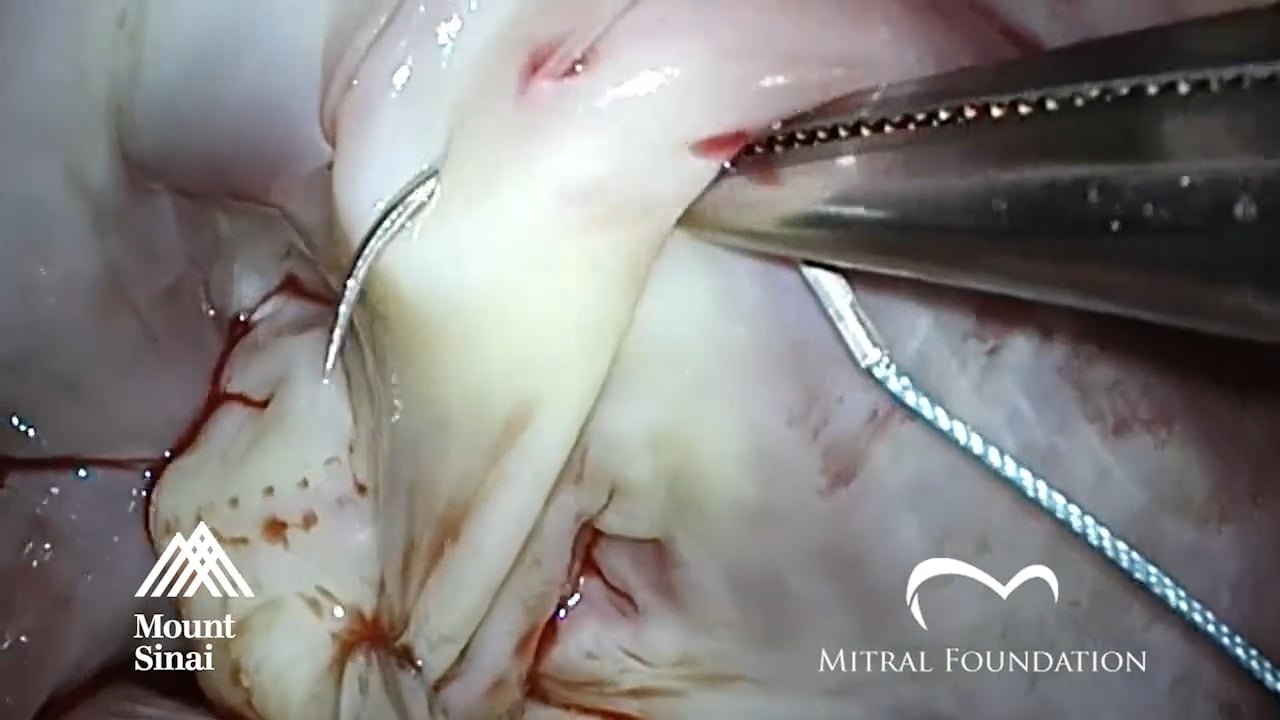
The anterior leaflet is now sized and found to be at 38 mm. To correct the anterior leaflet prolapse, we are placing some Gore-Tex sutures within the anterior papillary muscle and subsequently the posterior papillary muscle, which will be used to correct residual prolapse. The posterior leaflet had previously been re-approximated at the P1 and reconstituted P2 segments and annulus sutures have been placed around the entire annulus.


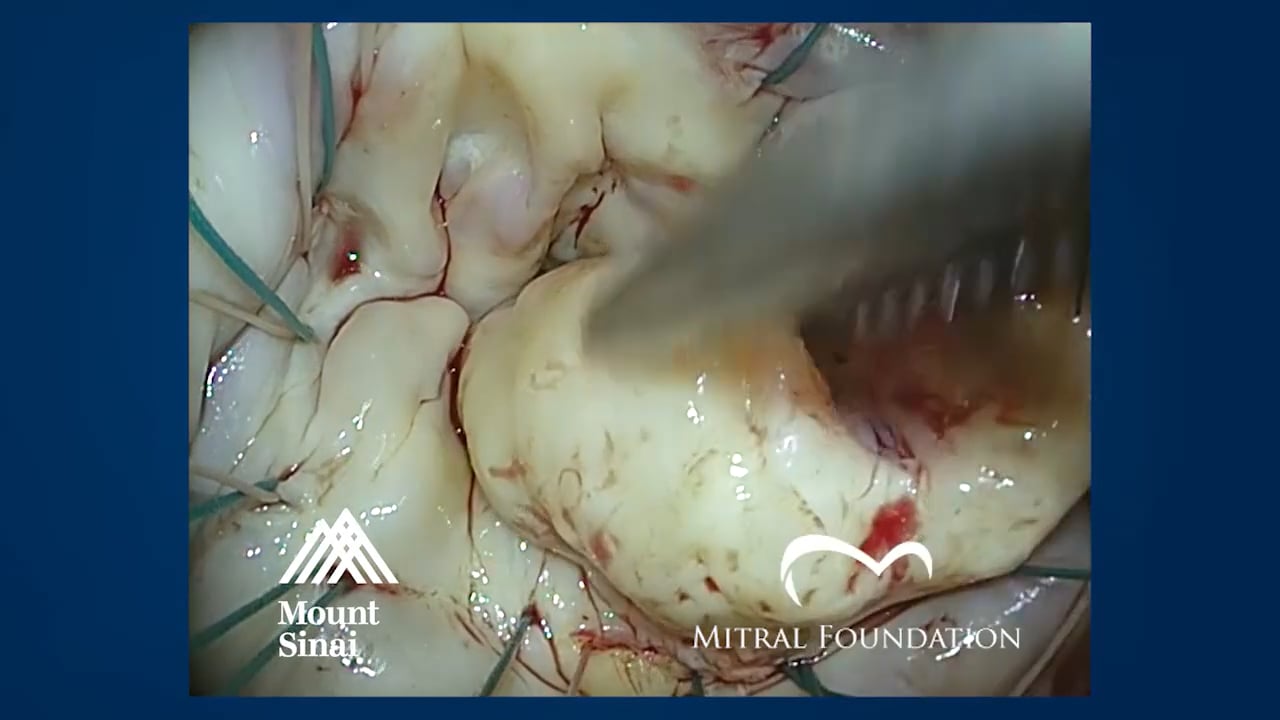
It is best to place these Gore-Tex sutures at this point. As once the annuloplasty ring is placed, it could be difficult to gain exposure to the sub-annular structures. The ring is in place and the valve is tested showing anterior leaflet prolapse. The areas prolapsing have been marked with a marking pen and the Gore-Tex chords are now being attached to the margin at this point.


We will attach two Gore-Tex chords to the A3 segment and one Gore-Tex chord to the A2 segment. The fourth Gore Tex chord will be used to reinforce the posterior leaflet repair. We prefer a dynamic method of adjusting the lengths of these chordate. For this we first tie two simple knots and then we distend the ventricle with saline, as shown, and then adjust the lengths of the chords as appropriate. Here, we can still see some residual prolapse. This would mean the suture needs to be tied to achieve a shorter length; this is being done now.


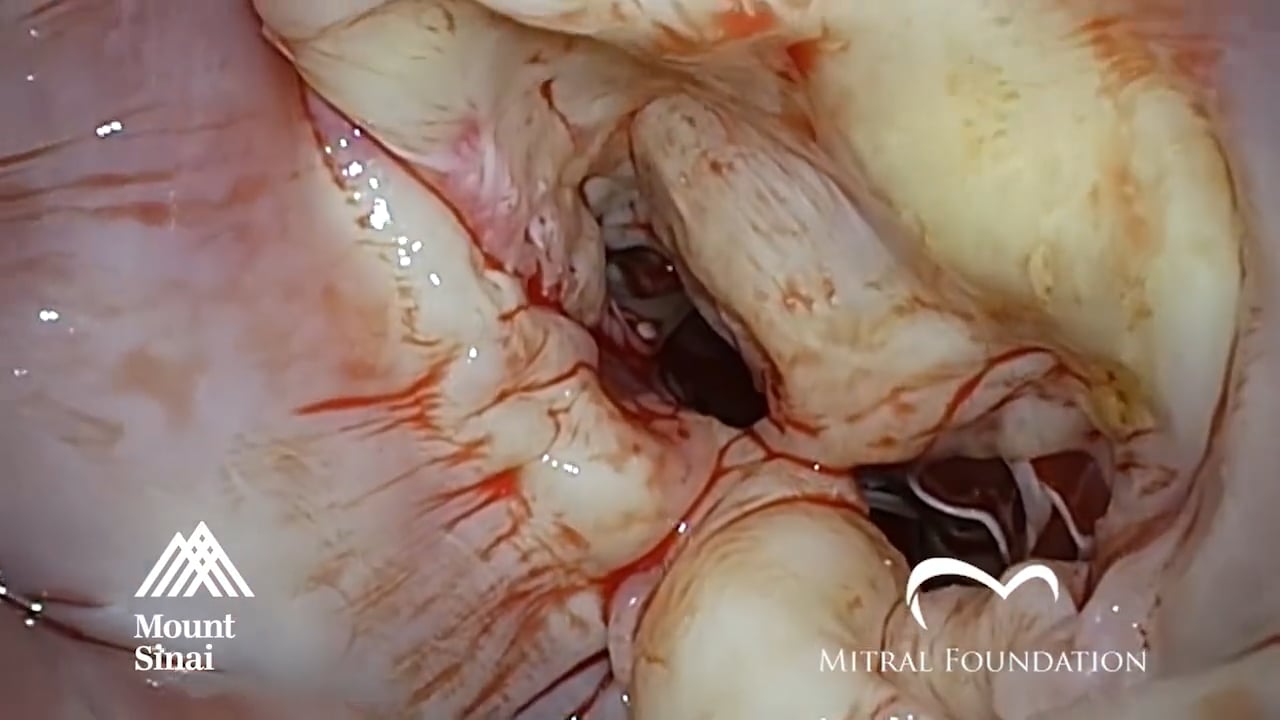
The valve will be tested again; at this point, the A3 segment is no longer prolapsing. We then complete our knots to achieve a final length. This is a completed repair which shows a symmetrical closure line with a good ratio of anterior to posterior leaflet. The ink test shows a 1-cm zone of coaptation. Postoperative echo confirms adequate zone of coaptation with minimal residual regurgitation.


PREOPERATIVE DIAGNOSIS: Barlow's Disease, Severe Mitral Regurgitation.


OPERATION: Complex Barlow's Mitral Valve Repair (Resection of Posterior Leaflet and Decalcification, Sliding Leaflet Plasty. Gore-Tex Cord to Posterior Leaflet, Gore-Tex Cords x 2 to Anterior Leaflet and 38mm Carpentier-Edwards Physio-Ring Annuloplasty.)


SURGEON: Anelechi Anyanwu, M.D.


INDICATIONS FOR SURGERY: The patient is a 33 year old male who has a long history of a cardiac murmur. He has recently noticed increased palpitations and on echocardiography was observed to have severe mitral regurgitation. Although, his ventricle was of normal size and function, in view of the severe regurgitation, and recent onset of palpitations he was referred for surgical treatment.


OPERATIVE PROCEDURE: The mitral valve was exposed. Inspection of the valve revealed the previously described findings. We first started by resecting the mid-segment of P2. We resected this together with a calcified mass and all chordal attachments. Following resection, we detached the remainder of P2 and also P3 right to the posterior commissure. We further made a horizontal excision of the base of P2 to reduce the height further. We then resected the remainder of P2 up to the cleft with P1. There was no need to resect P1 as the height was acceptable at this point.


We then plicated the annulus using six interrupted 2-0 Ethibond sutures. Ring sutures for the annuloplasty were then placed through the posterior annulus. We then performed an asymmetrical sliding plasty sliding the P3 and remnant of P2 so that this portion of the valve would meet the P1 segment. A sliding plasty was performed by means of two layers of 4-0 Prolene sutures.


Following this, the newly constituted posterior leaflet was reapproximated with interrupted 5-0 cardinal sutures joining the adjacent segments of P1 and this portion of P2. Next, we placed the remainder of the annuloplasty sutures around the anterior annulus. We then selected a 36 Physio-ring. This was true size commissure to commissure slightly undersized based on the length of the anterior leaflet. This ring was then tied down securely. Four Gore-Tex sutures were placed to the papillary muscles. Using saline to adjust the height, we implanted these Gore-Tex sutures in the P2 segment, A2 segment and two in the A3 segment. Following adjustment, all Gore-Tex sutures were tied and resulted in a competent valve. The ink test showed adequate surface of coaptation.


POSTOPERATIVE ANALYSIS: The post-bypass transesophageal echo revealed absent residual regurgitation.

 
Department of Cardiothoracic Surgery | The Mount Sinai Medical Center | 1190 Fifth Avenue | New York, NY  10029 | 866-MITRAL5 (648-7255)

Home | Site Map | The Mount Sinai Hospital | Press | About This Site | Legal Statement | Privacy Policy | Contact
Copyright © 2010, The Mount Sinai Medical Center. All Rights Reserved. Site by Wang Media.


This website is certified by Health On the Net Foundation. Click to verify. This site complies with the HONcode standard for trustworthy health information:
verify here.