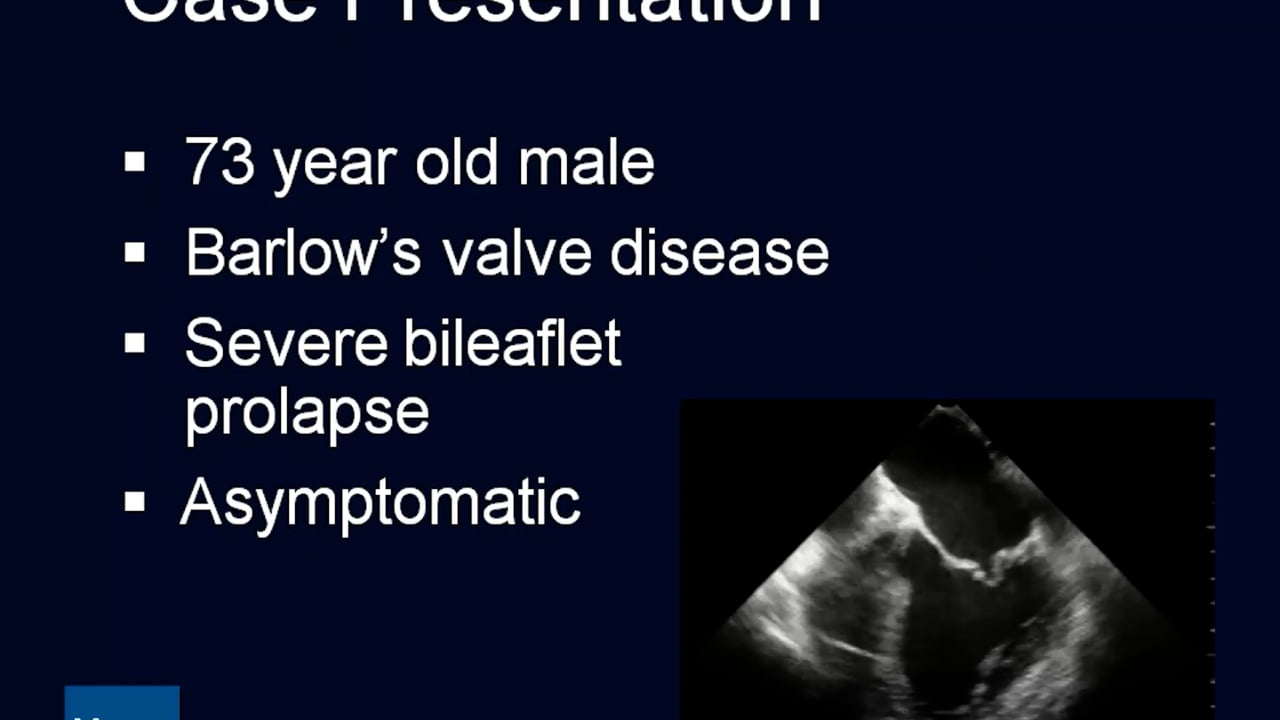
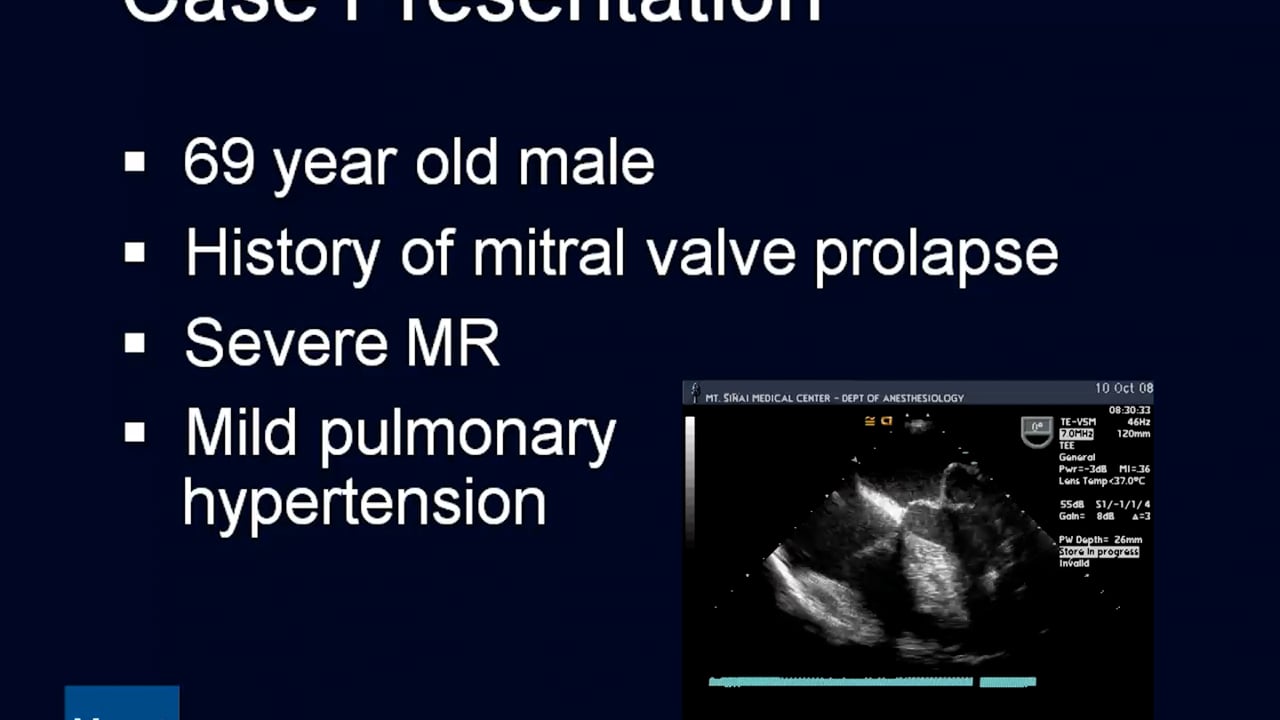
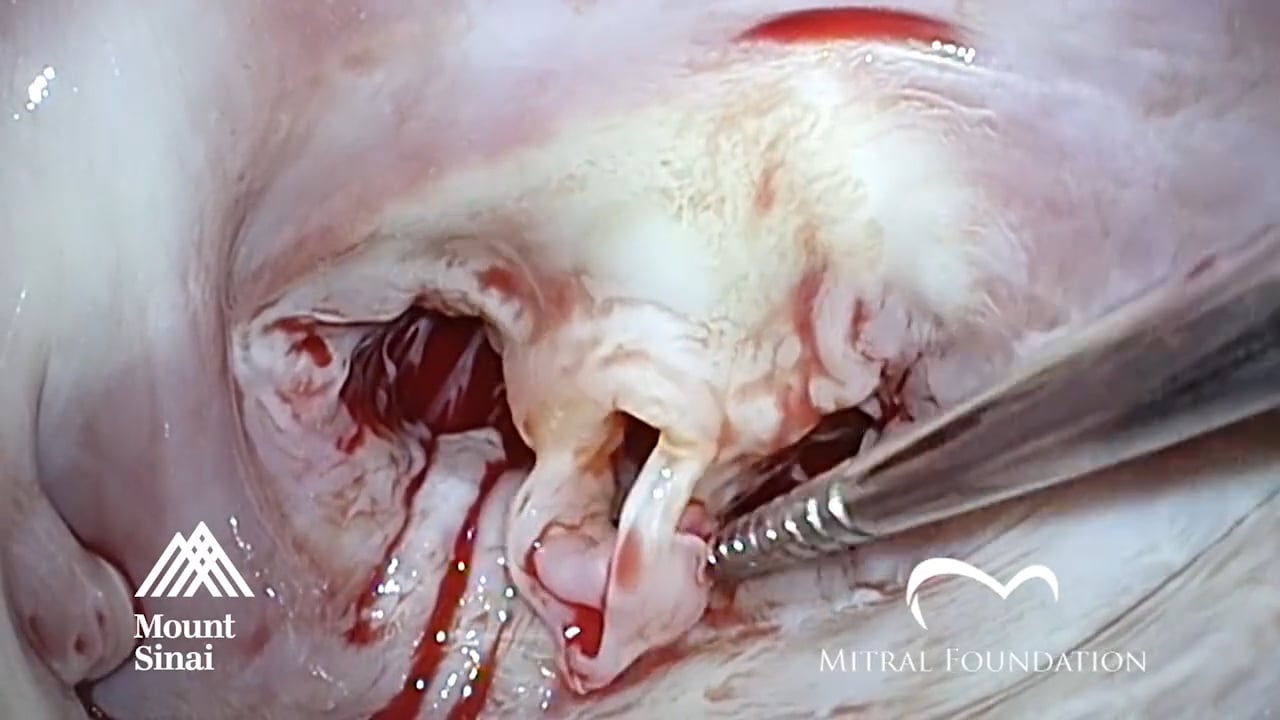
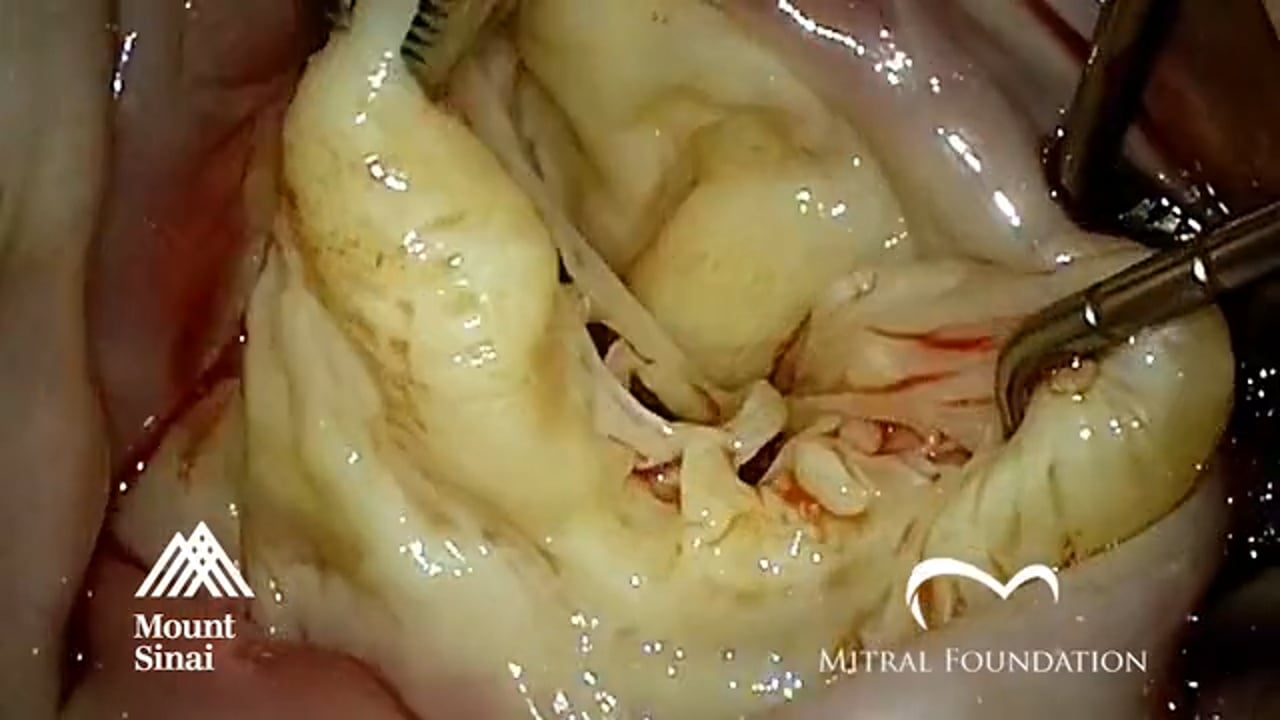
This is a case of a 69-year-old man with a history of mitral valve prolapse and severe mitral insufficiency. He also has developed moderate pulmonary hypertension.
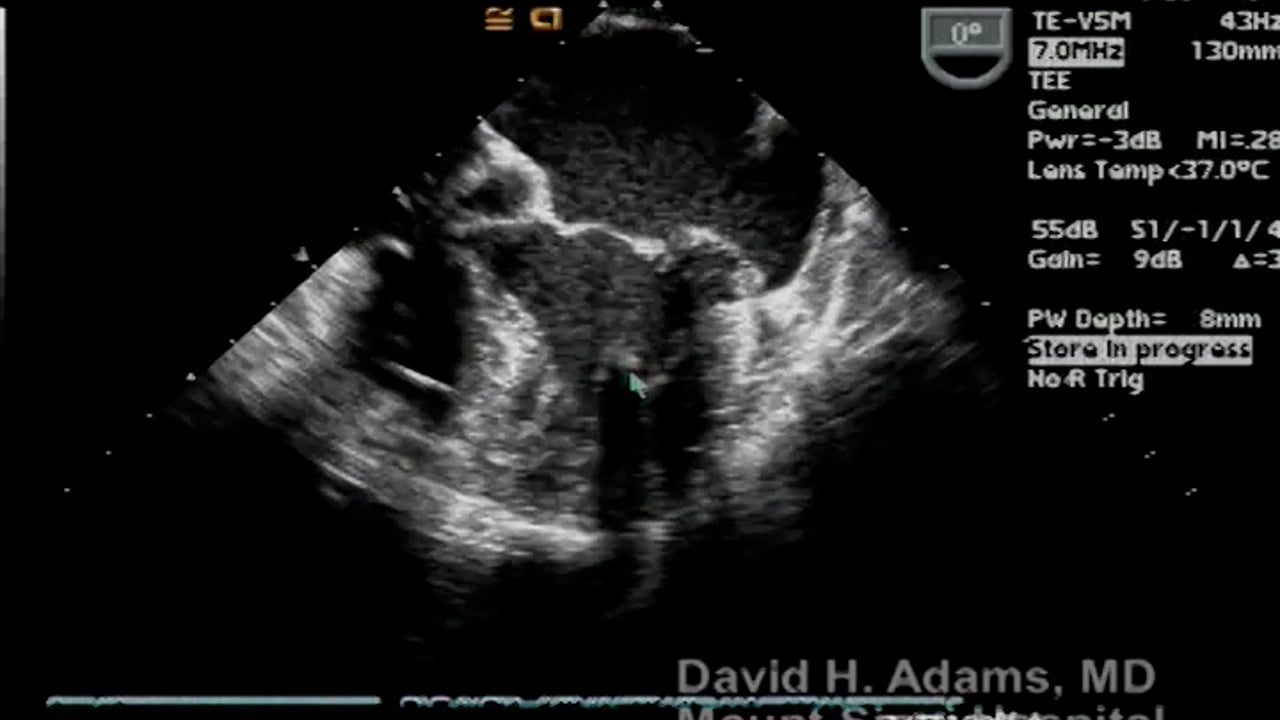
The echocardiogram documents a significant jet of mitral valve regurgitation as well as posterior leaflet prolapse. Valve analysis shows the ruptured chordae to the middle scallop or the P2 segment of the mitral valve. The anterior leaflet appears to be normal in this patient. A jet lesion from the mitral regurgitation is evident along the anterior annulus. Injecting saline in the ventricle shows the malcoaptation due to the ruptured chordae.
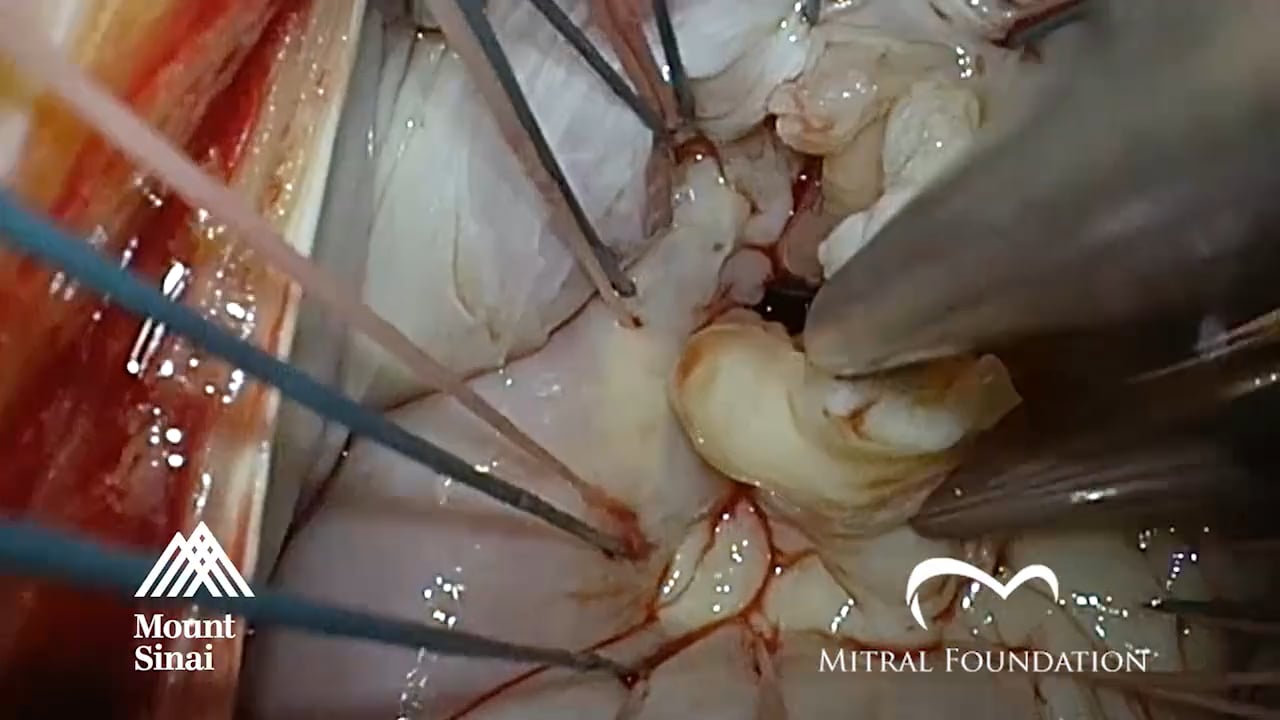
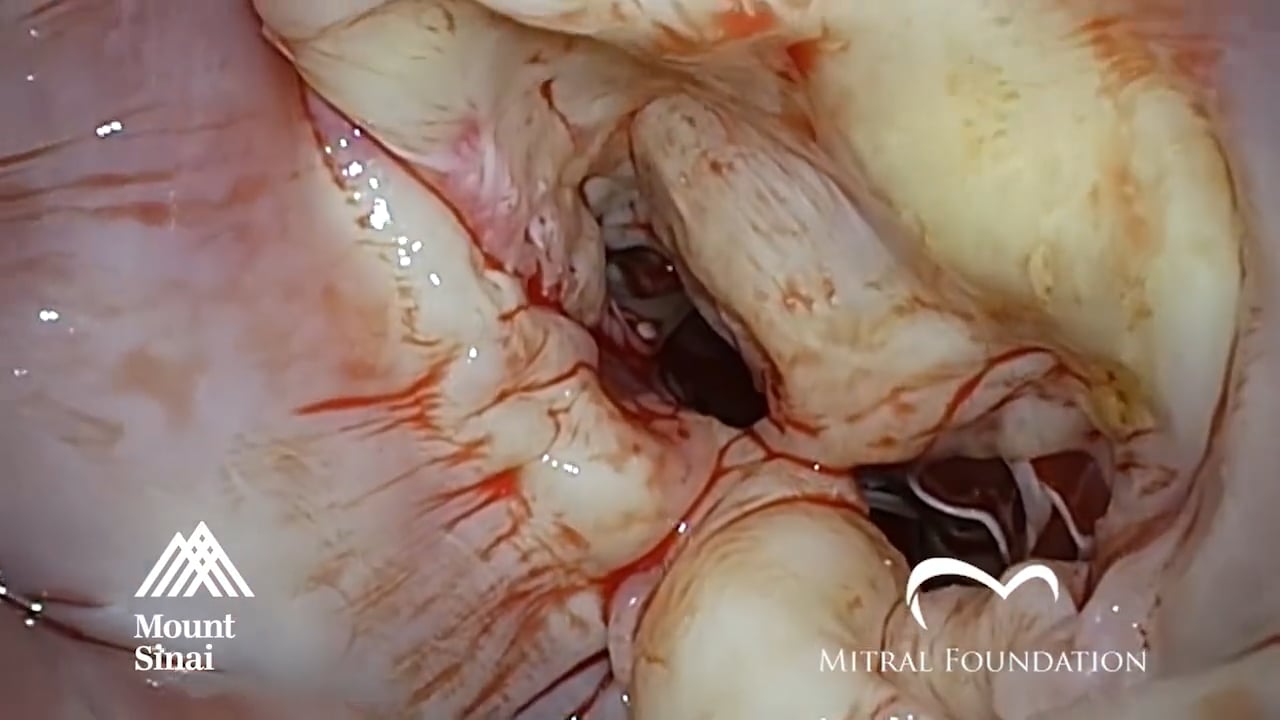
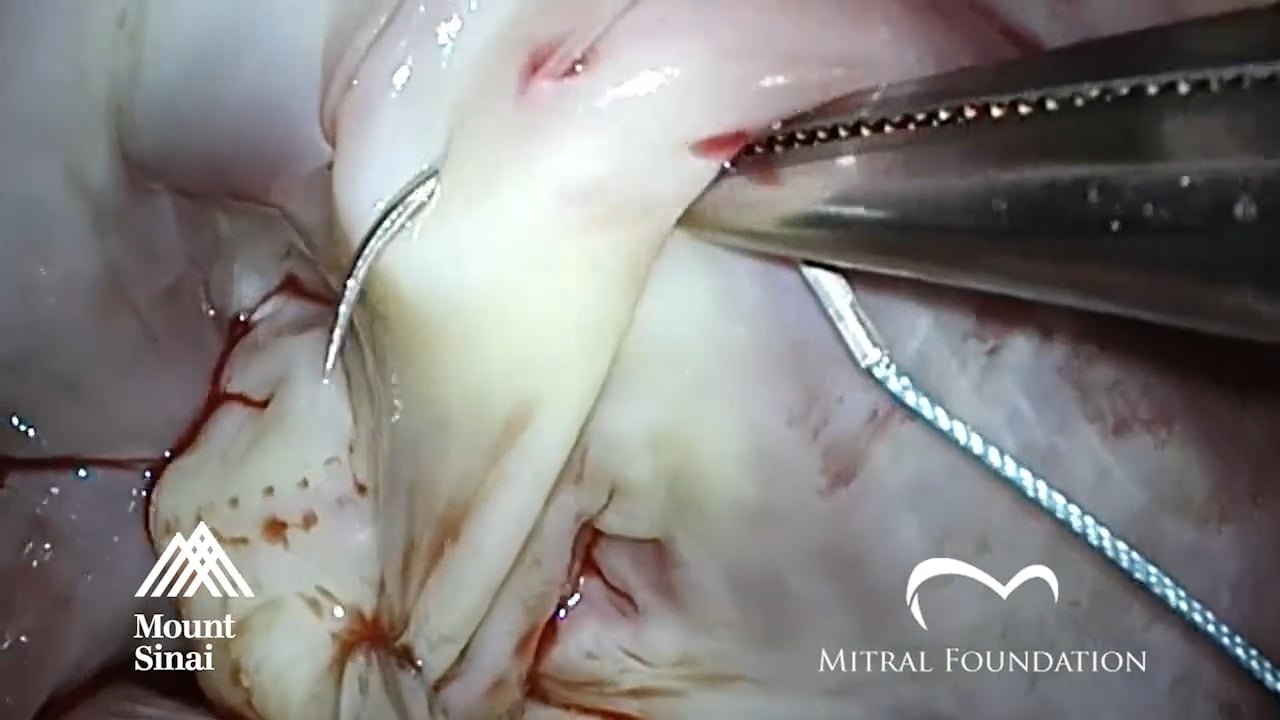
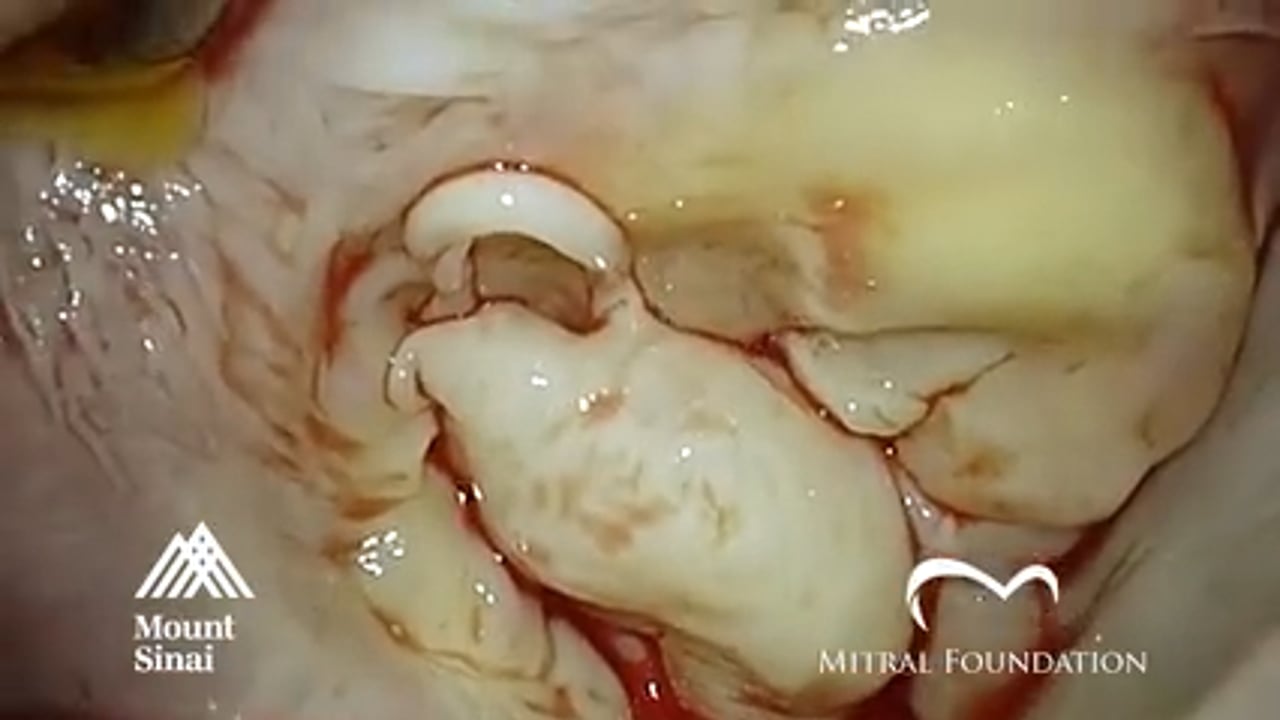
As we move the camera in, you can see the papillary chordal attachments to the leaflet. There are several ways to repair a valve like this. In this particular case, we are going to do a quadrangular resection. We are going to cut out a rectangle of this very abnormal leaflet segment. Here we will cut the leaflet directly off the annulus with supporting frame of the valve. We need to close this leaflet defect; before we do that, we will take advantage of the exposure to cut the secondary chordae to the leaflet. What that does is it will take tension off our repair. You can see all the steps it takes to perform even a simple valve reconstruction. So, here again, we are identifying a secondary chord and then cutting it sharply with a knife.
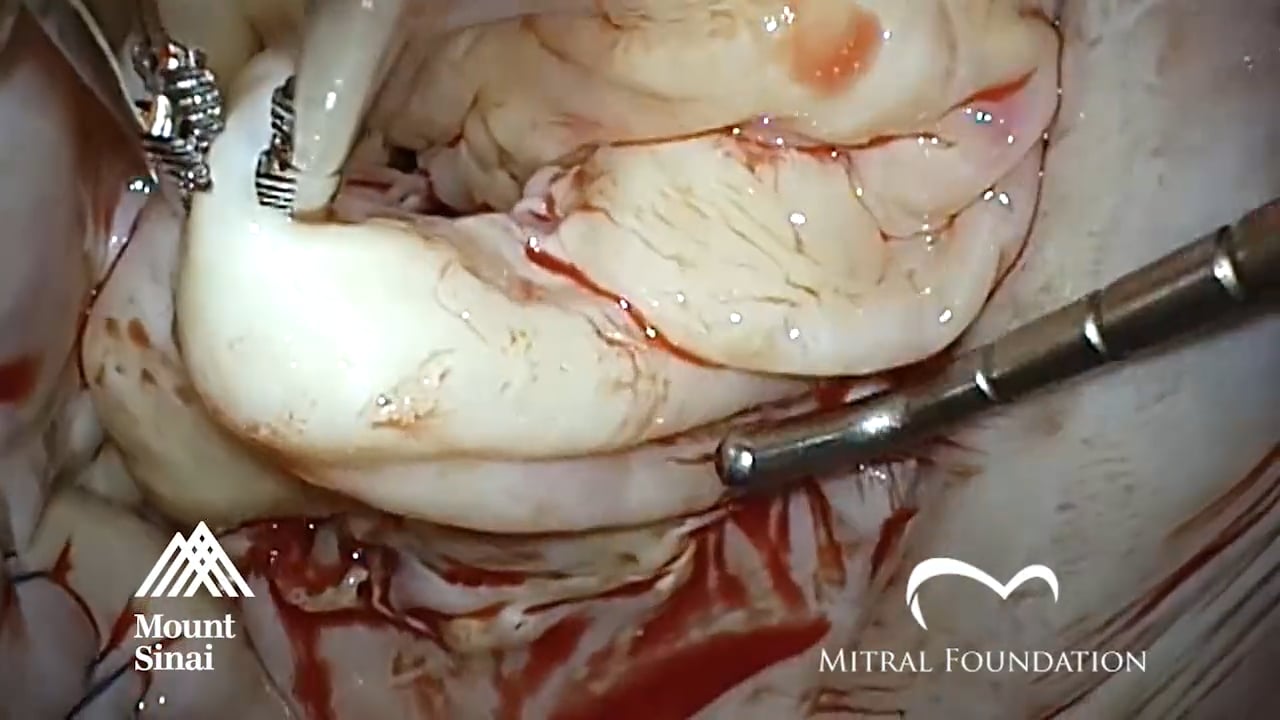
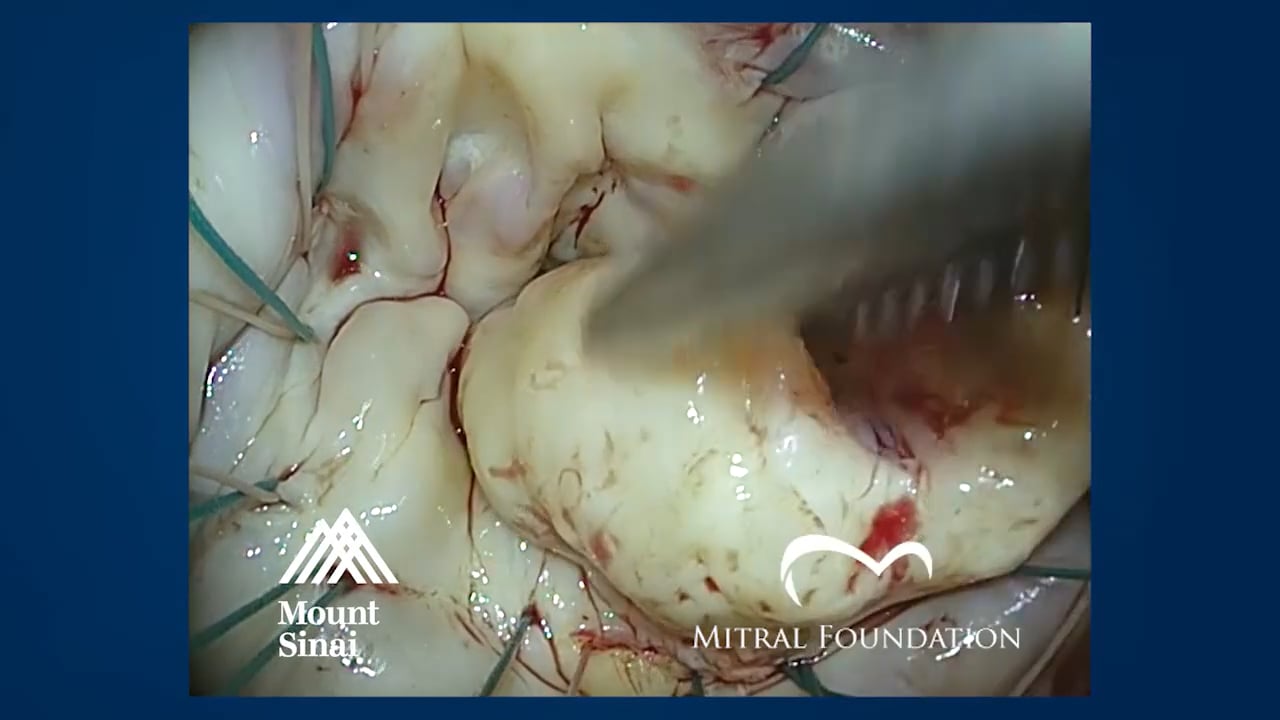
In order to close these two edges of the leaflet without tension, we are going to perform an annular compression. To do that, we place a series of sutures in parallel along the annulus. As we pull down on this suture we have tied, you can see how each adjacent suture then compresses the annulus. Now we have compressed the annulus and we do not have tension on the leaflet edges. Now we can take a series of interrupted Prolene sutures and carefully line up these two residual cut edges of normal leaflet tissue. We prefer an interrupted technique for this, so that we can line up these two edges very precisely. Well now that we have done that, you can see once we tie these sutures the valve is competent. We are using a ring sizer to pick an annuloplasty ring. We now use an ink marker to perform a test we designed at Mount Sinai to look at the closure line and to assess the surface of coaptation. The echocardiogram demonstrates a perfect result, as demonstrated by the ink test.